What's inside!
- 1. Content Creation for Marketing Teams
- 2. Customer Support Automation
- 3. Personalized Marketing Campaigns
- 4. Product Design and Innovation
- 5. Software Development Assistance
- 6. Data Analysis and Business Insights
- 7. Human Resource Management
- 8. Sales Optimization and Lead Generation
- 9. Content Translation and Localization
- 10. Virtual Assistants for Business Operations
- Business Impact of Generative AI
- How Businesses Implement Generative AI
- Role of Origami Studios in AI...
- Conclusion
- Trending FAQs About Generative AI Use...
Share:


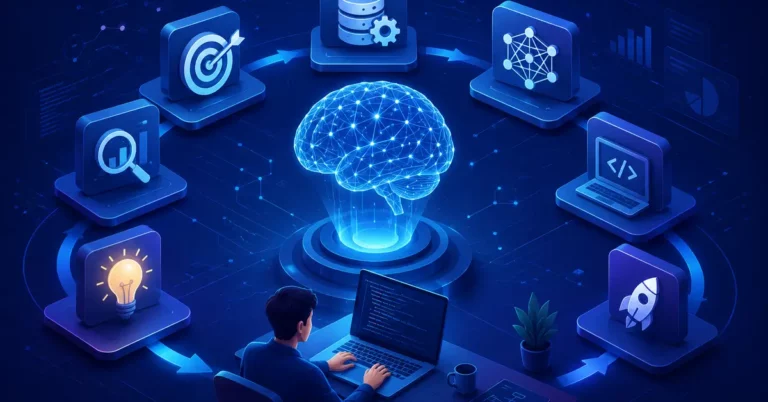
Generative AI is changing how companies work, plan, and grow. It is no longer just a future idea, it is already part of daily operations in many industries. From writing content to building smart customer support systems, businesses are using it in practical ways. The idea behind generative AI use cases is simple. It helps machines create text, images, code, and insights that normally need human effort. This shift is helping teams save time and focus on bigger goals. In today’s fast digital world, generative AI in business is becoming a key driver of efficiency, creativity, and smarter decision making across every industry.
1. Content Creation for Marketing Teams
One of the most common generative AI use cases is content creation. Marketing teams use it to write blogs, social media posts, email campaigns, and product descriptions. It helps speed up the writing process while keeping ideas fresh and relevant. Instead of starting from zero, teams can use AI generated drafts and refine them with a human touch. This makes content production faster and more consistent. Businesses also use it to test different messaging styles and improve engagement. With the rise of Generative AI Development Services, companies are now building custom tools that match their brand tone and audience needs more accurately.
2. Customer Support Automation
Customer support is another major area where generative AI in business is making a strong impact. AI powered chat systems can handle common questions, solve basic issues, and guide users in real time. This reduces waiting time and improves customer satisfaction. Many companies now use AI automation examples to manage thousands of queries without increasing support staff. These systems can also learn from past conversations and improve responses over time. This creates a smoother experience for both customers and businesses. As a result, human agents can focus on complex problems while AI handles repetitive tasks efficiently and accurately.
3. Personalized Marketing Campaigns
Personalization is becoming essential in modern marketing, and generative AI use cases make it easier than ever. Businesses can create highly targeted campaigns based on user behavior, preferences, and purchase history. AI helps generate personalized emails, ads, and product recommendations that feel more relevant to each customer. This improves conversion rates and builds stronger customer relationships. Instead of using one message for everyone, companies can now create multiple versions automatically. These enterprise AI applications help brands connect with their audience in a more meaningful way, making marketing efforts more effective and data driven.
4. Product Design and Innovation
Generative AI is also changing how new products are designed. Companies can use it to create design concepts, prototypes, and variations in a short time. This reduces the need for long brainstorming sessions and manual sketching. Designers can explore more ideas quickly and choose the best direction. In industries like fashion, automotive, and technology, this is becoming a powerful tool. It allows teams to test creativity without heavy costs or delays. With Generative AI Development, businesses are building systems that support innovation at every stage, helping them stay ahead in competitive markets and deliver better products faster.
5. Software Development Assistance
Software teams are also benefiting from generative AI use cases. Developers use AI tools to write code, fix bugs, and improve software performance. It works like a smart assistant that suggests solutions and speeds up development cycles. This reduces repetitive coding work and allows developers to focus on complex logic and architecture. Many enterprise AI applications now include code generation features that improve productivity. Even non technical teams can use AI to build simple applications or automate workflows. This is transforming the software industry by making development faster, more accessible, and more efficient for businesses of all sizes.
6. Data Analysis and Business Insights
Understanding data is critical for every business, and generative AI helps simplify this process. Instead of manually analyzing large datasets, companies can use AI to generate clear insights and summaries. It can highlight trends, predict outcomes, and suggest actions in simple language. This helps decision makers understand information faster and take better steps. Generative AI in business is especially useful for financial analysis, sales forecasting, and market research. It turns complex data into easy explanations that anyone can understand. This improves decision making and reduces the time needed to process important business information.
7. Human Resource Management
Human resource teams are also using generative AI use cases to improve hiring and employee management. AI can write job descriptions, screen resumes, and even suggest the best candidates for a role. It also helps in employee training by creating personalized learning materials. This saves time and improves the hiring process quality. HR teams can focus more on people instead of paperwork. AI automation examples in HR also include onboarding support and employee engagement surveys. These tools make the entire HR process smoother, faster, and more organized while improving overall workplace experience for employees.
8. Sales Optimization and Lead Generation
Sales teams are using generative AI to find better leads and close deals faster. AI tools can analyze customer behavior and suggest the most promising prospects. They can also generate personalized sales messages that increase response rates. This makes outreach more effective and less time consuming. Businesses can also automate follow up emails and track customer interactions more efficiently. These generative AI benefits help sales teams focus on building relationships instead of manual research. As a result, companies see improved conversion rates and stronger customer engagement throughout the sales journey.
9. Content Translation and Localization
In global business, communication across languages is very important. Generative AI helps translate content quickly and accurately while maintaining tone and meaning. Companies use it to localize websites, marketing materials, and product documentation for different regions. This saves time compared to traditional translation methods. It also ensures consistency across all languages. With enterprise AI applications, businesses can reach international markets faster and with less effort. This improves global expansion strategies and helps brands connect with diverse audiences in a more natural and effective way.
10. Virtual Assistants for Business Operations
Virtual assistants powered by generative AI are becoming common in modern workplaces. They help schedule meetings, manage emails, generate reports, and handle daily tasks. This reduces workload for employees and improves productivity. These assistants can understand natural language and respond in a human like way, making them easy to use. Businesses are now integrating them into daily operations to improve efficiency. This is one of the most practical generative AI use cases because it directly supports employees in real time. It also helps companies maintain smooth workflows without adding extra pressure on teams.
Business Impact of Generative AI
The impact of generative AI use cases goes beyond automation. It is reshaping how businesses think, operate, and grow. Companies are saving time, reducing costs, and improving customer experiences through smart AI integration. Generative AI benefits include faster decision making, better communication, and improved productivity across departments. It also encourages innovation by allowing teams to experiment without high risk. As more organizations adopt Generative AI Development Services and Artificial Intelligence Development Services, the business landscape continues to evolve. AI is no longer optional, it is becoming a core part of modern digital transformation strategies.
How Businesses Implement Generative AI
Implementing generative AI starts with identifying clear business goals. Companies first analyze where AI can add value, such as marketing, support, or operations. Then they choose the right tools or invest in custom Generative AI Development solutions. Integration with existing systems is important to ensure smooth performance. Training employees is also a key step so they can use AI effectively in daily tasks. Businesses often start small and then scale up based on results. This approach helps reduce risks and ensures better adoption across teams while improving overall efficiency and performance.
Role of Origami Studios in AI Development
Origami Studios plays an important role in helping businesses adopt modern AI solutions. The company focuses on building custom Artificial Intelligence Development Services and Generative AI Development solutions tailored to business needs. From automation tools to advanced enterprise AI applications, the goal is to make AI practical and easy to use. Origami Studios helps organizations turn ideas into real world AI use cases that deliver measurable results. Their approach focuses on simplicity, performance, and long term value. This allows businesses to stay competitive while using AI in a meaningful and effective way.
Conclusion
Generative AI is no longer just an emerging trend, it is a practical tool that is transforming how businesses operate every day. From marketing and sales to HR and customer support, generative AI use cases are improving speed, accuracy, and creativity across industries. Companies that adopt these technologies early are gaining a strong advantage in efficiency and innovation. As AI continues to grow, its role in business will only become more important. The key is to use it wisely, focus on real problems, and build systems that support long term growth and smarter decision making.
Trending FAQs About Generative AI Use Cases
1. What are the most common generative AI use cases in business today?
The most common generative AI use cases include content creation, customer support automation, personalized marketing, data analysis, and software development assistance. Businesses also use it for HR tasks, sales outreach, and virtual assistants. These applications help companies save time, reduce manual work, and improve overall efficiency across departments.
2. How does generative AI improve business productivity?
Generative AI improves productivity by automating repetitive tasks and generating fast, useful outputs like reports, emails, and code. Instead of spending hours on manual work, teams can focus on strategy and decision making. This leads to faster workflows, better accuracy, and smoother operations across the entire organization.
3. What are the main benefits of generative AI in business?
The main generative AI benefits include cost savings, faster decision making, improved customer experience, and higher efficiency. It also helps businesses innovate faster by quickly generating ideas, designs, and insights. Many companies are now using it as a core part of their digital transformation strategy.
4. Can small businesses also use generative AI effectively?
Yes, small businesses can benefit from generative AI just like large enterprises. It can help them automate marketing, handle customer queries, and create content without hiring large teams. With the right tools or Generative AI Development Services, even small companies can compete with bigger brands in a smart and cost effective way.
5. What is the future of generative AI in business?
The future of generative AI in business is very promising. It will become more advanced, more personalized, and deeply integrated into everyday operations. From enterprise AI applications to fully automated workflows, businesses will rely more on AI to make decisions, create content, and manage operations efficiently.